

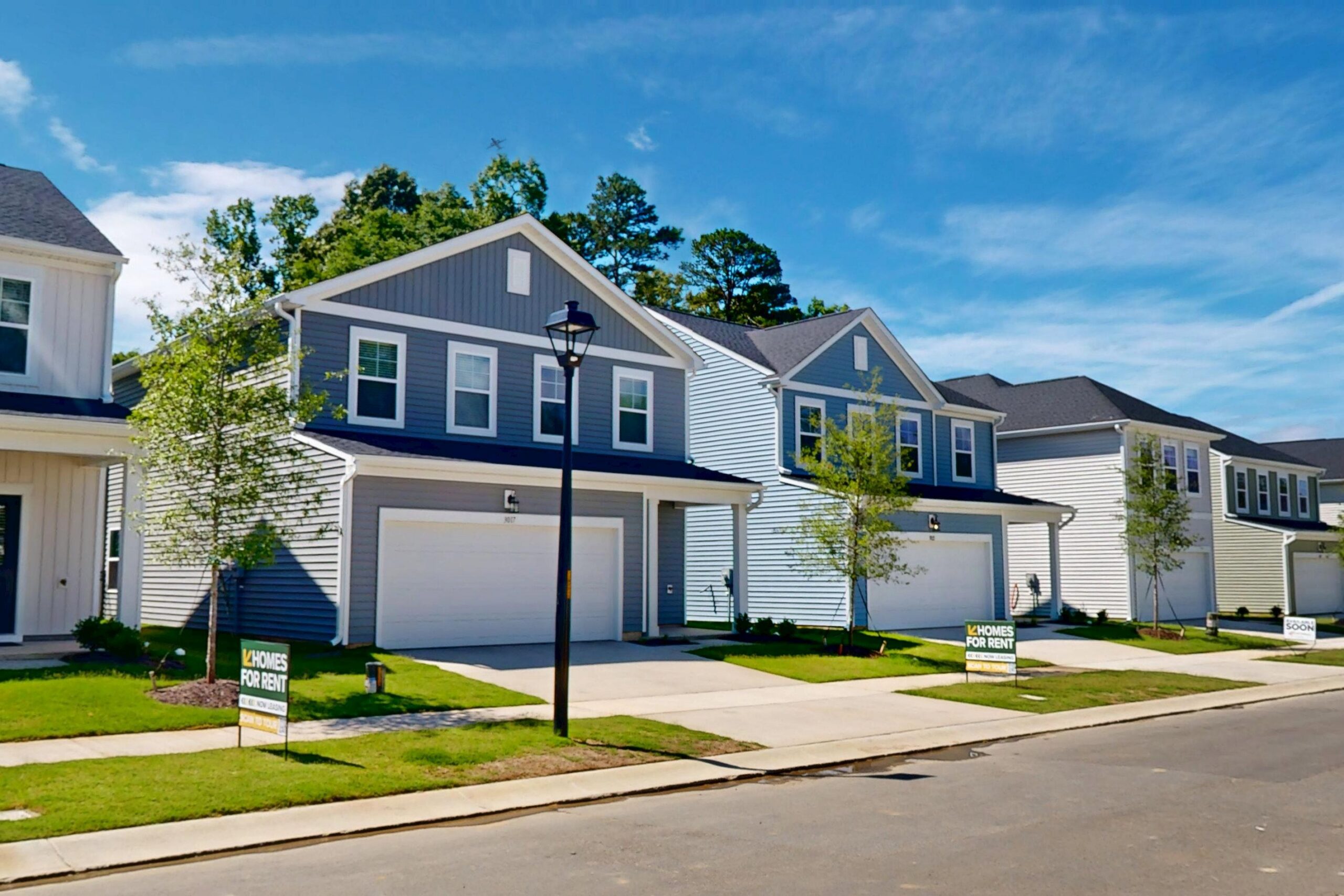

The House passed major housing affordability legislation. Disagreements over a key part of the rental market could keep it from becoming law.
The House of Representatives passed its version of a bipartisan housing affordability bill in a vote of 396-13 on Wednesday, bringing the legislation one step closer to President Trump’s desk.
But disagreements over key details threaten the package’s path to becoming law.
The 21st Century ROAD to Housing Act, another version of which the Senate approved in March, would be the first major piece of housing legislation in decades. It aims to tackle the country’s housing affordability crisis in several ways, including lowering production costs for manufactured homes, reducing regulations that can discourage building, updating financing options, and encouraging local governments to ease zoning restrictions.
Those provisions have broad bipartisan support in both chambers, but disagreements remain over how the legislation should treat a small but growing section of the housing market known as the build-to-rent industry.
The Senate bill requires large investors who build homes and rent them out to sell those rentals to individuals within seven years of construction. That provision drew ire from a range of industry participants, including builders, trade groups, and affordable housing advocates, who argued that the rule could shorten builders’ investment time horizons, thereby reducing construction and hurting the rental supply. It was ultimately scrapped from the House bill.
“If we’re focused on housing affordability, then you have to look at the protection of [build-to-rent] as a win, because those houses coming onto the market make rentals more affordable,” said Chris Nebenzahl, vice president for rental research at John Burns Research & Consulting.
A growing market presence
Building single-family rental homes has become more popular in recent years as home prices have risen. Many would-be buyers are now renting for longer and seeking suburban homes instead of apartments in urban areas.
In the aftermath of the financial crisis, some large corporations bought existing homes at rock-bottom prices and converted them into rentals. That business model has drawn the ire of politicians, including President Trump, and both versions of the bill seek to prevent landlords who own over 350 homes from buying more. But most institutional landlords have largely stopped buying up homes to rent out due to rising prices and interest rates.
”No one's willing to finance a project that has this sort of gun to their head in seven years.
Richard RossCEO of Quinn Residences
Instead, they build them. Newer builders and investors have also focused on building rentals, especially in regions like the Sun Belt that have favorable zoning laws, strong population growth, and healthy job markets.
Last year, 68,000 build-to-rent homes began construction, down from a record 84,000 the year before, according to Census Bureau and National Association of Homebuilders statistics. Homes built as rentals now make up about 7% of new construction, up from 2.7% between 1992 and 2012.
Although those homes aren’t for sale, the added housing supply has helped renters. Many cities where build-to-rent firms have been particularly active, like Dallas, Phoenix, Denver, and Charlotte, have seen rents fall in recent years, Nebenzahl said.
The Senate version of the bill, though, has builders contemplating pulling back.
“Not two weeks after that bill came out, all capital dried up for build-to-rent,” said Richard Ross, CEO of Quinn Residences, which developed and operates more than 5,000 single-family rentals in the Southeast. “No one’s willing to finance a project that has this sort of gun to their head in seven years.”
The seven-year selling rule is a challenge for the industry for several reasons, Ross said. Funding for construction projects is typically done on 10-year terms, making selling in the middle of that period complicated, especially when there’s a risk of being forced to sell into a market downturn. And it’s unlikely that many renters who occupy the homes could afford to buy them.
Whether the House and the Senate can ultimately reach an agreement on build-to-rent and other differences is unclear. The chambers will also have to decide whether a proposal to ban central bank digital currencies should be permanent, as in the House version, or temporary, as in the Senate’s passed version.
“We worked closely with the White House and our colleagues in both chambers on a bill that puts families first and addresses the housing crisis.” Sens. Tim Scott and Elizabeth Warren, who sponsored the Senate bill, said in a joint statement on Wednesday. “There’s still work to be done and we are committed to continuing to work with the White House and our colleagues in the House on a housing bill that can pass the Senate and get to the President’s desk.”
Trump’s support for the bill, in either current form, has wavered. Last week, in a Truth Social post, he urged the House to pass the Senate’s version of the bill. In another post, he suggested Republicans attempt to use the housing bill to pass the SAVE America Act, voter identification legislation that lacks sufficient support to pass the Senate.
But on Wednesday, the White House said in a statement that it supports the House bill, and asked that “both chambers resolve any remaining differences expeditiously.”
This article was written by Claire Boston for Yahoo Finance.